In KindyMenu the menu, recipe cards and every child's allergies are already there. A relief cook sees it all from the first minute. The cook still checks allergies and swaps.
Demo data, an example only.
Your cook quits for good. Years of know-how walk out.
Portions, swaps that work for each child, supplier habits: often kept in one head or a notebook.
With KindyMenu: Recipes with weights, swaps and logs are written down in KindyMenu. They stay with the centre, not with one person.
A child with anaphylaxis gets the wrong meal.
A serious incident means a report to the regulator, questions about your licence, worried families.
With KindyMenu: A swap for each child, which the chef checks before serving. Every check has a name and a time. KindyMenu cannot promise there will never be an incident.
Food cost creeps up and you see it a month late.
Five centres, five ways of buying, no clear number.
With KindyMenu: Food cost per child per day for every centre. Tap a centre to see what was bought, when, from whom.
Every centre buys from a different supplier.
Prices and quality change from centre to centre.
With KindyMenu: One menu and one order list for several centres. You choose the supplier and send it yourself.
The assessor arrives and nobody can find the folder.
The NQS rating is public. Parents look at it.
With KindyMenu: Menus on display, records and registers in one place. The director presses Print. It supports the visit; it does not decide your rating.
Money and purchasing
KindyMenu tracks what each centre pays, item by item. See price trends and spot when a price jumps, so you can act before it costs you thousands.
KindyMenu shows what each centre pays each supplier for the same item, side by side. You negotiate with the full picture, and you see where to ask for a better price. For example, one centre pays A$6 and another pays A$5 for the same item. You can also build one order for several centres and send it yourself.
Example only, not a guarantee
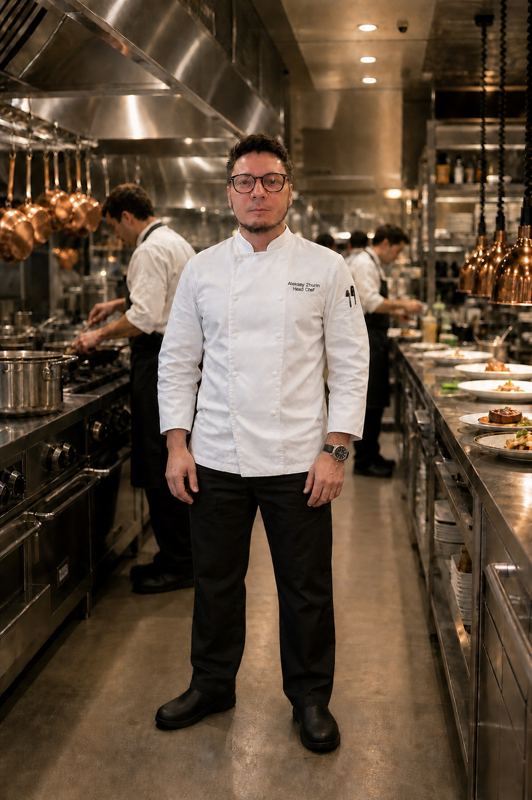
“From my own kitchen: a centre with 70 children spends about A$1,300 a week on food. That is about A$67,600 a year.”Aleksey Zhurin, Head Chef, 30+ years in food costing
Your own numbers will differ. KindyMenu shows the prices; it does not negotiate or place orders for you.
Designed to support these standards. The centre and its staff remain responsible for the food.
For owners and multi-site groups
Risk and continuity
Visibility
Money
Quality Area 2
Good for your staff too. A clear process in their own language means less guessing and more confidence, most of all in the first weeks.
Example only
Example yearly value, with the assumptions used
| What changes | Example assumption | A year |
|---|---|---|
| Better supplier prices | About A$18.57 a child a week on food (A$1,300 for 70 children) × 400 children × 48 weeks ≈ A$356,571; 5% better prices | A$17,829 |
| Standard menu and recipe cards: cooks follow weights and method, so less waste and over-use | 2% of the same food spend (example) | A$7,131 |
| Less time on kitchen paperwork | 1 hour a week per centre × 5 centres × A$45 × 48 weeks | A$10,800 |
| A new cook up to speed sooner | 1 change a year × 5 shifts of 7.6 hours × A$35 | A$1,330 |
| Example value | Sum of the four lines above | A$37,090 |
| KindyMenu Multi | Published price, up to 5 centres, ex. GST | A$3,990 |
KindyMenu Multi is about A$0.21 a child a week (400 children, 48 weeks). The example value is about 9 times the price.
KindyMenu Multi costs A$3,990 a year (ex. GST). In this example it gives back about 9×.
One tool for standard processes and food cost across every centre.
“When I looked for a program built for childcare kitchens, I could not find one in Australia or New Zealand. So I built it.”Aleksey Zhurin
These are example assumptions, not KindyMenu data and not a promise of savings. Use your own numbers. The cost of a serious allergy incident is not included.
See the owner demoStart free trial
6 or more centres? Email hello@kindymenu.com for a quote.
KindyMenu gives you records, structure and visibility. It is designed to support your food-safety program. The centre and its staff remain responsible for the food and for meeting the rules.
For groups with more than one centre
The same recipe cards everywhere. Costs and prices for every centre on one screen.
Recipes
Food cost
Suppliers
Video
Different suppliers mean different prices, quality and delivery days. They also mean different recalls and write-offs to chase. That is a headache for the chef and for the bookkeeper.
KindyMenu shows each centre’s prices and costs side by side, so you can decide if one supplier for the group makes sense. It does not place orders or negotiate prices for you. On the Multi plan you can mark preferred suppliers and build one order for several centres, then send it yourself.
Example only
If one supplier and less waste bring your food cost down, that money can go back into the kitchen: a cook’s wages, new equipment or a kitchen renovation.
An example, not a promise of savings. Results depend on your centres and your suppliers.
Good food is a big part of how a child grows and develops. One standard helps every centre serve it.
In the demo, open Manager, then Price trends or Finance.

Founder of KindyMenu
30+ years as a head chef · Food Safety Supervisor
I spent more than 30 years in restaurants and hotels, as a head chef and as a group executive chef. I know how a professional kitchen is run, and what matters when food is prepared: a clear process, a record someone else can read, and no step left to memory.
After my child was born, I changed careers and went to work in a childcare kitchen. The work there was still on paper, written on a knee. Thousands of sheets, and they get lost. Handwriting is hard to read. You cannot tell who wrote what.
I looked for a program made for childcare kitchens. I did not find one in Australia or New Zealand. So I built KindyMenu myself. It follows the way a head chef thinks. The menu, the allergy, the cost and the food-safety record sit in one place. A cook can read them on the day, and a parent can see the week.